In Islam, every moment in time carries meaning and purpose. Yet, among the seven days of the week, Friday (Jumu’ah) holds a divine distinction unlike any other. It is the day Allah chose for the believers to gather, remember Him collectively, and renew their faith through prayer and reflection.
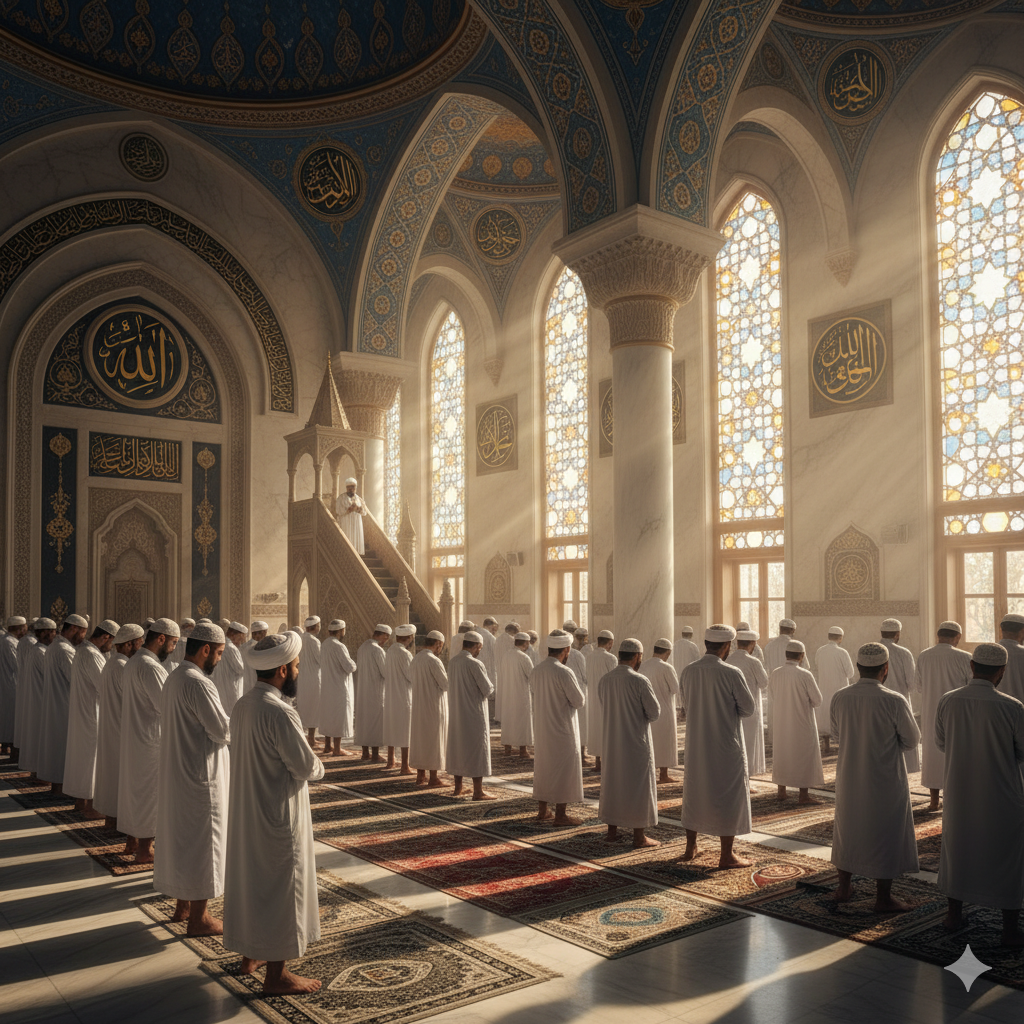
Friday is not just a weekly holiday or a cultural habit; it is a spiritual event — a time when hearts are purified, sins are forgiven, and blessings descend upon the believers. It is a reminder of the Ummah’s unity and devotion, where Muslims across the world stand shoulder to shoulder in the remembrance of Allah.
This article explores why Friday is considered the most blessed day in Islam, highlighting its origin, significance in the Quran and Hadith, the virtues of Jumu’ah prayer, recommended Sunnah acts, and the deep spiritual connection it shares with Hajj and Umrah.
The word Jumu’ah (الجمعة) originates from the Arabic root “jama’a”, which means to gather or assemble. This perfectly reflects the essence of Friday — a day that unites the believers in worship and remembrance of Allah.
According to Islamic tradition, Friday was chosen by Allah Himself as a day of gathering and blessings. It is reported in Sahih Muslim that the Prophet Muhammad (peace be upon him) said:
“The best day on which the sun has risen is Friday. On it, Adam was created, on it he was admitted to Paradise, on it he was expelled from it, and the Hour will be established only on a Friday.”
(Sahih Muslim, Book 7, Hadith 854)
From the moment Adam (AS) was created to the final Day of Judgment, Friday stands as a symbolic link between the beginning and end of human existence. It is the day Allah honored as the weekly festival of Islam — a day for prayer, mercy, and spiritual renewal.
Unlike other faiths that observe the Sabbath or Sunday as holy, Islam elevates Friday as a balance between worldly engagement and divine remembrance — a day not for rest, but for reflection and worship.
The Quran explicitly mentions Friday in Surah Al-Jumu’ah (62:9–10):
“O you who believe! When the call is proclaimed for the prayer on Friday, hasten to the remembrance of Allah and leave off trade. That is better for you if you only knew. And when the prayer is finished, then disperse through the land and seek of the bounty of Allah, and remember Allah often that you may succeed.”
This verse beautifully balances the worldly and spiritual life of a Muslim — reminding believers to pause their work when the call to Jumu’ah prayer is made, and to resume worldly efforts with gratitude after performing the salah.
The Prophet Muhammad (PBUH) emphasized the virtues of Friday repeatedly:
“Whoever takes a bath on Friday, purifies himself as much as he can, then uses oil (or perfume), wears his best clothes, and goes early to the mosque… his every step will be counted as the reward of a year’s fasting and prayer.”
(Sahih al-Bukhari)
Another Hadith mentions the angels’ role during Jumu’ah:
“On Friday, the angels stand at the door of the mosque and record the people in order of their arrival. The one who comes early is like one who offers a camel in sacrifice, then like one who offers a cow, then a ram, then a chicken, then an egg. When the Imam comes out, they close their registers and listen to the Khutbah.”
(Sahih Muslim)
These teachings reveal how Friday is not just another day of prayer — it’s a day written in the records of angels, a day of mercy, and a divine opportunity to erase sins and draw nearer to Allah.
The Jumu’ah prayer (Salat al-Jumu’ah) is one of the most important acts of worship for Muslim men. It replaces the Dhuhr prayer on Fridays and is obligatory for every adult male who is able to attend.
The Prophet (PBUH) warned against neglecting this sacred duty:
“Whoever neglects three Jumu’ah prayers out of negligence, Allah will seal his heart.”
(Abu Dawood, Tirmidhi)
The Khutbah (sermon) delivered before the prayer holds immense spiritual weight. It’s a time when believers are reminded of their responsibilities, guided with wisdom, and spiritually rejuvenated. The Khutbah replaces two rak’ahs of the normal Dhuhr prayer, symbolizing the unity of listening and acting upon Allah’s message.
For women, attending Jumu’ah is optional but rewarded if done with sincerity. For men, it’s a collective act of obedience that strengthens the Muslim community and fosters brotherhood.
When Muslims across the world gather every Friday, they echo the spirit of Hajj — standing together, facing one Qiblah, united in faith and submission.
Friday is a day filled with special Sunnahs that bring immense blessings. The Prophet (PBUH) encouraged believers to prepare for Jumu’ah with dignity and devotion.

Here are the most important recommended acts:
Each of these acts transforms an ordinary Friday into a day of spiritual renewal, preparing the heart for forgiveness and reward.
Among the greatest blessings of Friday is the “Hour of Acceptance” (Sa’at al-Istijabah) — a special moment when Allah accepts all sincere supplications.
The Prophet (PBUH) said:
“On Friday there is an hour when no Muslim stands and prays, asking Allah for something, but He will give it to him.”
(Sahih Bukhari, Muslim)
Scholars have held different views about when exactly this hour occurs. The most widely accepted opinion is that it falls between Asr and Maghrib, or during the time when the Imam sits on the pulpit before the Khutbah.
Believers are encouraged to make dua throughout the day, but especially during these hours, with humility and faith that Allah hears every sincere call.
Friday is woven into the history of creation and the destiny of humankind. The Prophet (PBUH) mentioned that:
“It was on Friday that Adam was created, on Friday that he was admitted to Paradise, and on Friday that he was expelled from it. The Last Hour will not come except on Friday.”
(Sahih Muslim)
This makes Friday a day that links the origin of humanity to its final destiny.
While the Jews were commanded to observe the Sabbath (Saturday) and the Christians Sunday, Allah guided the Muslim Ummah to Friday — a middle path symbolizing balance between work and worship.
Islam does not demand isolation from worldly life; instead, it calls for mindful living — working, earning, and praying in harmony with faith. Friday reflects that balance beautifully.
Despite its clear significance, many misconceptions surround Friday.
Some people mistakenly believe:
In truth, Friday is blessed throughout the day, not just during the prayer. Acts like dhikr (remembrance), sadaqah (charity), visiting family, and reading Quran all carry multiplied reward.
However, innovations (bid’ah) not found in the Quran or Sunnah should be avoided. The true spirit of Jumu’ah lies in sincerity, humility, and devotion.
Friday and pilgrimage share a profound spiritual connection. Both symbolize unity, purification, and submission before Allah.
On Fridays, the Ummah gathers weekly in mosques; during Hajj, Muslims gather annually in Makkah — millions of hearts beating as one in remembrance of Allah.
Both are days of forgiveness and renewal. Just as Hajj wipes away sins, Friday offers weekly cleansing for those who attend sincerely.
At Hajj and Umrah Express, we believe that every act of worship — from Friday prayer to the sacred pilgrimage — is an opportunity to reconnect with Allah and rediscover your spiritual purpose.
Our mission is to guide pilgrims with ease, comfort, and devotion, helping them experience the essence of faith both in prayer and in travel.
In the modern world, where schedules are tight and distractions endless, Friday remains a sacred pause — a weekly reset for the soul.
It reminds us that no matter how busy life becomes, Allah deserves our time, our presence, and our gratitude.
Friday teaches discipline (through Jumu’ah), cleanliness (through Ghusl), and community (through congregation). It invites families to pray together, forgive, and reflect on Allah’s mercy.
Each Jumu’ah is an opportunity to start fresh — to turn back to Allah, strengthen our hearts, and reconnect with the essence of Islam.
Friday is more than a day of prayer — it is a divine blessing and a reminder of Allah’s mercy upon this Ummah.
It connects the beginning of creation to the Day of Judgment, links the individual to the community, and turns every believer’s week into a rhythm of remembrance and renewal.
“May Allah bless our Fridays with light, forgiveness, and peace.”
To continue your journey of spiritual growth, explore our Hajj Packages 2026 and Umrah Packages — designed to help you experience the essence of faith, unity, and devotion.